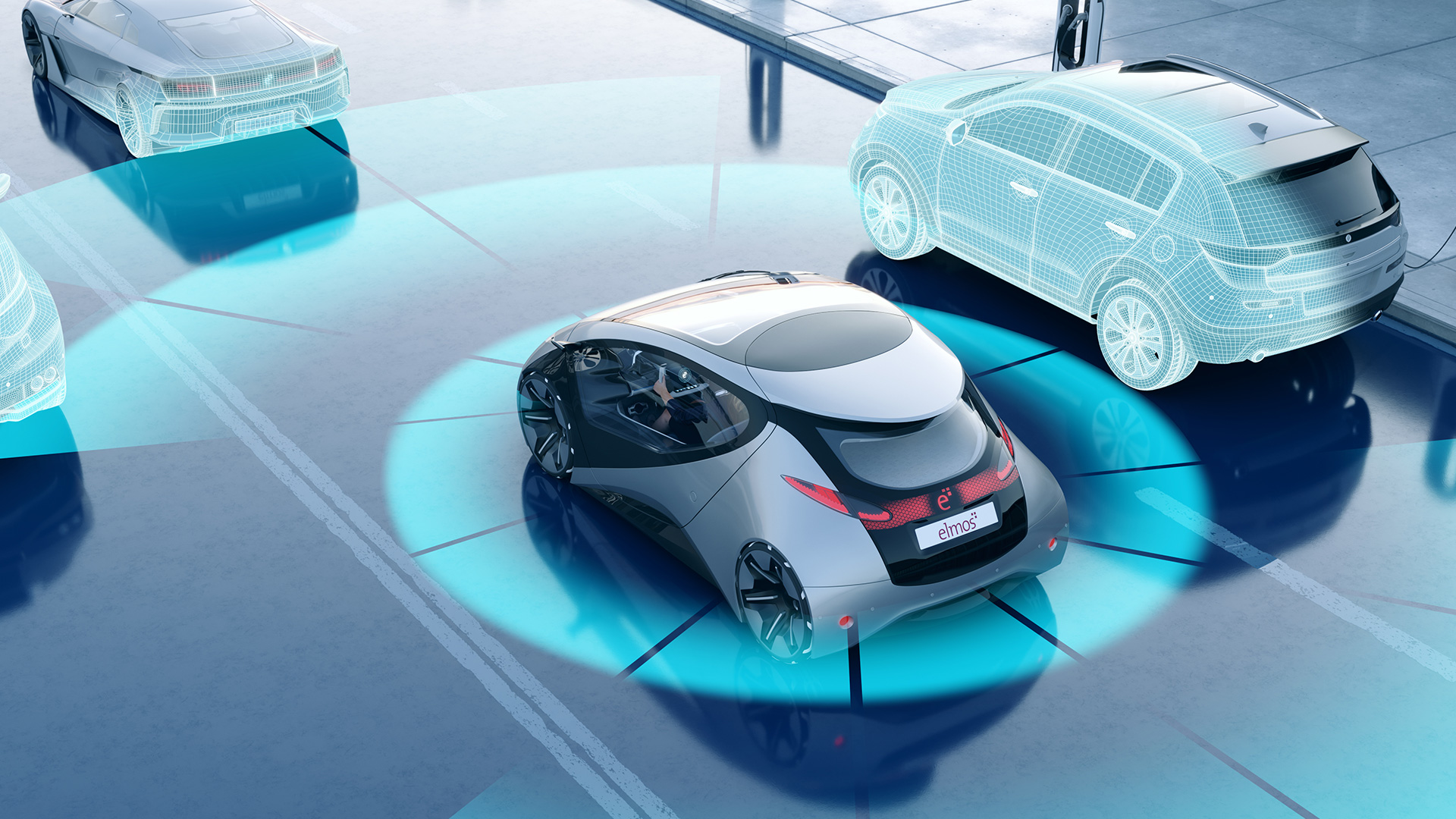

The automotive industry is currently undergoing a fundamental transformation. Although this transformation poses significant challenges for entire value chains—from automakers to the supplier industry and on to materials research—it also offers a wide range of opportunities. And as in nearly all markets, key technologies offer fundamental solutions in a wide variety of areas. To highlight a few examples of innovative drivers for the mobility transition, the NanoMikroWerkstoffePhotonik.NRW cluster, in collaboration with the automotiveland.NRW cluster, has decided to dedicate a magazine to the topic of “Key Technologies in the Car of the Future.” The response from North Rhine-Westphalia’s high-tech community was so overwhelming that we can only include a few examples and cannot cover the full spectrum. Nevertheless, we are confident that we have been able to identify a few exciting developments for you as well.
One of the key technologies, for example, is digitalization—an important and universal tool of our time. Supported by software and hardware—and brought together through digitalization—it is playing an increasingly vital role in our economy, not only in production but also, in the future, in planning and management processes. The car of the future is expected to be not only more environmentally friendly but also smarter. The sensor technology that already supports us today in driver-assistance systems will enable autonomous driving in the future. However, this will increase the overall demand for semiconductors in automobiles, as—in addition to sensors and actuators—good connectivity to the outside world and the ability to communicate and entertain will play an increasingly important role in purchasing decisions. Read the interview with Prof. Dr.-Ing. Peter Burggräf, Chair of International Production Engineering and Management (IPEM) at the University of Siegen.
In addition to digitalization and sensor technology, material innovations are a key topic in the business world. After all, 70 percent of all technical innovations in Germany are based on material innovations. Innovative materials are closely linked to new production processes. Here, too, the speed at which components are becoming not only more high-performance but also lighter is impressive. Thanks to innovative approaches, 3D printing and custom-shaped, functionalized glass surfaces are finding their way into mass production. Without material innovations, the energy density required for electric mobility in batteries cannot be achieved. But recycling must not be overlooked either, as it is key to increasing resource efficiency as well as the resilience of North Rhine-Westphalia’s economy. In this regard, we are proud to present to you in this magazine “cylib,” the battery recycler from Aachen that won this year’s NRW Innovation Award.
In an interview with NMWP.NRW and automotiveland.nrw, Ms. Mona Neubaur, Minister of Economic Affairs, Industry, Climate Protection, and Energy for the State of North Rhine-Westphalia, attested to the high innovation potential of our economic and scientific landscape. For sustainable mobility, we need clean cars, and key technologies are indispensable for this. The NRW Minister of Economic Affairs emphasizes that it is important for us to possess and continue developing the expertise for these key technologies in North Rhine-Westphalia.
As you can see, key technologies such as nano- and microsystems technology, innovative materials, and photonics are important enablers for the automobile of the future. They are rarely noticed by the general public, but they make indispensable contributions to improving our lives and strengthening the economy in a sustainable way. With this magazine, we would like to offer you insights into some of the activities and innovative initiatives coming out of NRW.